Balanced Input Microphone Pre-Amplifier, High Quality Audio For Long Distance Wiring
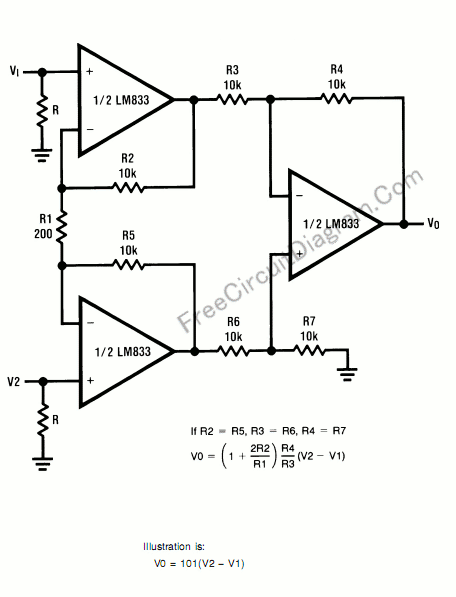
Balanced input has three connections, ground, positive signal, and negative signal. When we trace the signal using oscilloscope, if we take the ground as the reference, then the negative signal and the positive signal has similar shape but with inverted polarity. If we measure the signal between positive and negative output, the we have two times larger signal than what we see from ground reference. The positive and negative signal can be seen as a differential signal. As a differential signals, they have main advantage of good noise resistance. When long wires carry this signal, the positive and the negative wire should be routed very close to each other, and the ideal one is using a twisted pair cable. This is to ensure that both wires are exposed by same noise figure, so the differences caused by the noise is zero (cancel each other). This microphone pre-amplifier use this technique, detecting the voltage differences of two input point. Here is the circuit’s schematic diagram:
You can easily wire your microphone for few hundred meters distance without noise problems. Remember that the input is not connected to ground, the ground line should be used only for shielding, but you don’t really need shielding when using a balanced input. Don’t use coaxial cable’s shielding connection for one input and the core for the other, because they will be exposed to different noise figure and this balanced system won’t work. Use a twisted pair cable for the best result.